On this page
For many seniors and individuals with mobility challenges, stairs become a daily struggle—painful joints, balance issues, or post-surgery recovery make climbing them risky. Avoiding the stairs, feeling trapped on one floor, or relying on others can feel frustrating.
The solution? A stairlift for home. But many homeowners wonder:
- Can stairlifts be installed on any stairs?
- What if my staircase is curved, narrow, or steep?
- Are there stairlifts for outdoor steps?

The good news—yes! Whether you need a stair lift for old people or a model for a straight, spiral, or outdoor staircase, there’s a stairlift solution for you. From residential standing stair lifts for tight spaces to outdoor stair lifts for porches, options exist for every home.
This guide covers key factors like staircase type, width, and structural strength, helping you choose the right stairlift for a safer, independent lifestyle. Let’s find the best fit for your home!
What Factors Affect Stairlift Installation?
Installing a stairlift can significantly improve mobility and independence within a home, but not all staircases are immediately suitable for installation. Various factors determine whether a stairlift can be fitted and what type suits your needs best. Below are the key considerations that influence stairlift installation.
1. Staircase Type
One of the most crucial factors in stairlift installation is the type of staircase in your home. Different stair configurations require different stairlift models:
- Straight Staircases: These are the easiest to fit with a stairlift, as they require a simple, straight rail that runs from the bottom to the top of the stairs. Installation is usually quick and cost-effective.
- Curved Staircases: If your stairs have bends, corners, or landings, a curved stairlift is required. These stairlifts use a custom-built rail tailored to the exact shape of your staircase, making installation more complex and expensive.
- Narrow Staircases: Homes with narrow staircases (typically less than 30 inches wide) may face installation challenges. However, compact stairlifts with foldable seats and footrests can often be used to maximize space.
- Spiral Staircases: Installing a stairlift on a spiral staircase is more complicated due to the tight curves and varying widths. Custom curved stairlifts are required, but they may not be feasible for extremely narrow spiral designs.
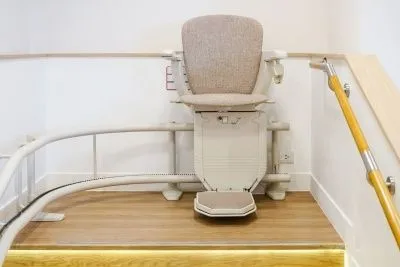
For homeowners who require a stair lift for old people, choosing the right model based on staircase type is crucial for ensuring safety and ease of use.
2. Staircase Width
The width of your staircase plays a significant role in determining whether a stairlift can be safely installed. Most stairlifts require a minimum width of 27-30 inches to accommodate the seat and rail while allowing enough space for other household members to use the stairs.
- Wide staircases (above 30 inches): Ideal for standard stairlift installations.
- Narrow staircases (below 27 inches): This may require a compact stairlift model with a slimmer profile. Some staircases may be too narrow for any stairlift installation.
- Dual-rail systems: Certain manufacturers offer twin-rail systems that take up less space for extremely narrow or complex staircases.
For homes with limited space, a residential standing stair lift may be a better option, allowing users to stand or perch while using the stairlift instead of requiring a full seat.
3. Landing and Clearance Space
A stairlift requires sufficient space at both the top and bottom landings to ensure safe entry and exit. Key considerations include:
- Top Landing Space: The user needs enough room to dismount safely. In some cases, an extended rail or a swivel seat can help users exit onto the landing comfortably.
- Bottom Landing Space: There should be enough space for the stairlift to park without obstructing doorways, hallways, or foot traffic. Some stairlifts have folding tracks that tuck away when not in use.
- Intermediate Landings: If your staircase has a split landing or a turn, a custom curved stairlift will be required to navigate the transition.
4. Structural Strength of the Staircase
The staircase must be structurally strong enough to support the weight of the stairlift and the user. Since stairlifts are attached to the stair treads (not the wall), the staircase material and condition are important factors:
- Solid wood or concrete stairs: These provide a strong and stable base for stairlift installation.
- Older or weakened staircases: If your stairs are made of weak or deteriorating material, additional reinforcement may be required before installation.
- Floating or open-riser stairs: These may require custom rail systems or alternative installation techniques.
Can Every Staircase Accommodate a Stairlift?
In general, stairlifts can be installed on most staircases, but the feasibility depends on several factors, including the staircase shape, width, and structural integrity. Below are the different staircase types and their compatibility with stairlifts:
Straight Staircases – Easily Accommodated
- Straight staircases are the most straightforward for stairlift installation.
- A straight stair lift, which consists of a single rail that runs from the bottom to the top of the stairs, is used.
- Installation is quick and cost-effective, typically completed within a few hours.
Curved or Multi-Landing Staircases – Requires Customization
- Staircases with bends, turns, or intermediate landings require curved stairlifts that are custom-made to fit the specific shape of the staircase.
- The rail is specially designed and takes longer to manufacture and install.
- Although curved stair lifts are more expensive than straight ones, they provide a smooth and continuous ride.
Narrow Staircases – Possible with Compact Solutions
- Staircases that are less than 27-30 inches wide can be challenging for stairlift installation.
- Compact stairlift models with foldable seats, footrests, and armrests can help maximize space.
- If a standard stairlift doesn’t fit, perch stairlifts (where the user stands instead of sitting) may be an alternative.
- Alternative solutions like vertical platform lifts may be required for extremely narrow staircases.
Outdoor Staircases – Weatherproof Solutions Available
- Outdoor stair lifts are designed for external staircases leading to gardens, porches, or garages.
- These stairlifts are built with weather-resistant materials, ensuring protection from rain, snow, and extreme temperatures.
- Additional safety features such as non-slip footrests, waterproof covers, and UV-resistant seats make them durable for long-term outdoor use.
What Modifications and Custom Solutions are Available for Unique Staircases?
If a standard stairlift isn’t an immediate fit, there are several ways to modify the staircase or use specialized stairlift models to ensure accessibility:
- Custom Rail Design for Curved and Spiral Stairs: Manufacturers can design a precisely measured rail that follows the unique path of your stairs.
- Perch or Standing Stairlifts for Narrow Stairs: If a seated stairlift won’t fit, a perch stairlift allows users to remain in a semi-standing position, reducing space usage.
- Swivel Seats and Folding Components for Tight Spaces: Some stairlifts come with automatic swivel seats to make dismounting easier and foldable arms, footrests, and tracks to maximize space.
- Powered Hinged Rails for Limited Landing Space: If the bottom of the stairs leads into a doorway, a hinged track can fold away when not in use.
- Heavy-Duty Stairlifts for High Weight Capacity: If additional support is needed, stairlifts with reinforced frames and motors can accommodate users up to 500 lbs.
Solutions for Extremely Narrow or Steep Staircases
For extra-narrow or steep staircases, a conventional stairlift may not always be the best solution. Alternative options include:
- Perch Stairlifts: Users lean against a small backrest instead of sitting, making it suitable for narrow stairs.
- Vertical Platform Lifts: A great alternative for wheelchair users when a stairlift isn’t feasible.
- Home Elevators: If space allows, a home elevator can be a long-term mobility solution, particularly for multi-story homes.
- Customized Rail Systems: In some cases, specialized dual-rail stairlifts may work better for extremely tight spaces.
Final Thoughts: Is a Stairlift Right for Your Home?
While stairlifts can be installed in most homes, the staircase type, width, steepness, and available space will determine which model is best suited. Whether you need an indoor stairlift, outdoor stair lifts, or a residential standing stair lift, there is likely a stairlift solution available for your needs. If you’re unsure whether a stairlift will fit your stairs, consulting a professional stairlift installer can provide clarity. Looking for expert advice? Contact us at HomePRO Mobility today for a free consultation and find out the best stairlift solution for your home!

Our Manufacturing Partners · Blog · Resources · Stairlifts · Ramps · All solutions · About · Contact
Restoring Independence. Improving Lives.