On this page
A stairlift is one option to explore when stairs become difficult. Compare the staircase layout, getting on and off, controls and seating with the needs of the person who will use it. This guide offers questions for that discussion, not a recommendation based on age alone.
What Features Are Essential in a Stairlift for Seniors?
A stairlift should feel like a natural part of the home. Not something bulky or confusing. The right choice depends on comfort, safety, and how easy it is to use day to day. Consider the following features while choosing the best stairlifts for seniors:

Safety and Stability on the Stairs
A stairlift does not eliminate the possibility of a fall or injury. Review the proposed model’s operating instructions, safety features and suitability with the installer. Features to ask about include:
- Secure seat design
- Safety belt support
- Stable rail movement
- Smooth stopping system
These stairlift safety features for the elderly reduce fear and build confidence in daily movement.
Quiet Operation
Ask to hear the proposed model operate and discuss its normal sounds and alerts. Quietness alone does not establish accessibility-code compliance; ask the installer which requirements apply to the specific product and installation.
Obstruction Sensors and Automatic Stop
Ask which obstruction sensors are included in the proposed configuration and how they work. They are not a guarantee against injury. Keep the route clear and follow that model’s operating instructions.
Battery Backup and Power Support
Some battery-powered stairlifts can operate for a limited time during an outage. Ask about the exact model, charging requirements, battery condition and outage limits. Do not assume it will remain available throughout every power cut.
Swivel Seat for Safe Movement
Ask how the seat turns and locks at the landing, whether it is manual or powered, and what support the person needs when getting on and off. Review the operating instructions for the exact seat and swivel option.
Comfortable Armrests and Foot Support
Compare the seat, armrests and footrest during the assessment. Ask which parts fold, how they are operated, and how much space remains for other stair users. Features and assistance needs vary by configuration.
Assessment question: What is difficult about using these stairs today, and what support would be needed to use the proposed lift? Discuss the answer before choosing a configuration.
What Are the Different Types of Stairlifts for Elderly Users?
Not every staircase is built the same. That is why choosing a stairlift depends heavily on the layout of the house and how the user moves every day.
Straight Stairlifts for Elderly
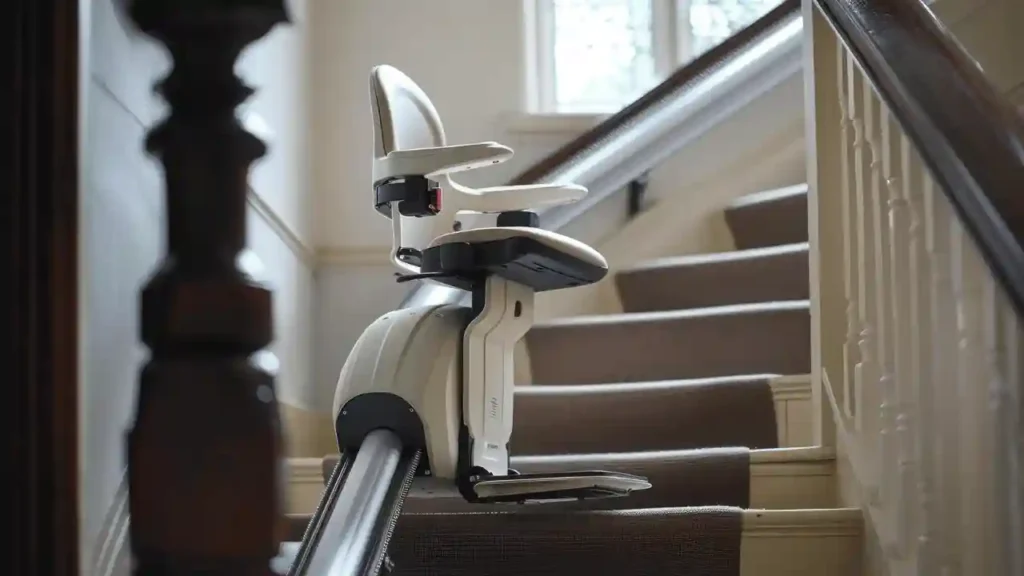
Straight stairlifts for the elderly work best for simple staircases without turns. These are the most common setups in many homes and are usually easier when it comes to stairlift installation. These stairlifts for the elderly are best suited for:
- Single straight staircases
- Easy home layouts
- Quick stairlift installation needs
A good example of this type is the Harmar Premium Pinnacle SL600. This model is often chosen because it supports up to 350 lbs, which shows a strong stairlift weight capacity for different users.
Curved Stairlifts
Curved stairlifts for seniors are designed for staircases with turns, bends, or landings. These systems are not standard fit. They require a custom rail design, which makes stairlift installation for seniors more specialized in such homes. The Harmar Helix Curved Stairlift, for example, features a narrow profile and ergonomic seating, enhancing comfort while accommodating complex stair shapes.
The Uplift Curved Stairlift offers another option, with lightweight aluminum construction and a capacity of up to 275 lbs. Its design balances strength with easier rail handling during installation. This ergonomic seating stairlift is a perfect choice for curved staircases and complex layouts.
Outdoor Stairlifts
Outdoor stairlifts are used for external staircases such as porch steps, garden entries, or outdoor ramps. Common outdoor stairlift features for seniors include
- Weather-resistant design
- UV-protected seating
- Durable structure for all seasons
A good example is the Summit SL350OD. It uses marine-grade seating that can handle rain, sun, and temperature changes while still staying comfortable and stable. Another example is the Handicare 1000 Outdoor Stairlift. This model focuses on strong waterproof protection and long-term durability, making it suitable for year-round outdoor use.
How Do I Choose the Right Stairlift for My Home?
This table provides a quick overview to help with decision-making when choosing a stairlift.
| Stairlift Type | Best Use Case | Key Strength |
| Straight Stairlift | Simple stairs | Easy stairlift installation |
| Curved Stairlift | Staircases with turns | Custom rail design |
| Outdoor Stairlift | Exterior access | Weather protection |
Why Stairlifts Support Aging in Place
A stairlift may be one part of a plan for accessing different floors at home. Review the staircase, landing spaces, power supply, operating instructions and ongoing service needs before deciding whether a particular installation fits that plan.
If pain, balance, strength or fatigue affects using the stairs, discuss individual support needs with a qualified healthcare professional as well as the installer. An equipment guide cannot determine which transfer or travel position is appropriate for a particular person.
Final Thoughts on Choosing the Best Stairlifts for Seniors
There is no single best stairlift for every older adult. Use this guide to compare the route, user needs, model features, installation scope and service arrangements. Ask for the proposed configuration and its limits in writing before deciding.
Contact HomePro Mobility to discuss your staircase and the questions to cover in an assessment. Ask which models and configurations are available and which installation requirements apply. Suitability depends on the home and the person using the lift.
Frequently Asked Questions
What Is the Best Stair Lift for Seniors?
There is no single best model for all seniors. Start with the staircase route, the person’s ability to use the proposed seat and controls, the exact model limits, and the installation and service requirements. Compare options through an individual assessment rather than choosing on age or price alone.
What to Look for in a Stair Lift?
You must look for safety features, comfortable seating, weight capacity, smooth controls, battery backup, and sensors that stop the lift when obstacles are detected.

Our Manufacturing Partners · Blog · Resources · Stairlifts · Ramps · All solutions · About · Contact
Restoring Independence. Improving Lives.