On this page
Standing and perch stairlifts are terms used for configurations that support a more upright travel position. A perch seat is not the same as standing unsupported. This guide explains questions about support, staircase fit, installation and cost; suitability must be assessed for the person and the proposed configuration.
What is a Standing Stair Lift and Who Should Use One?
A perch stairlift uses an elevated seat to support the user in a partly seated, nearly standing position. The exact posture and support depend on the product. If sitting, standing or transferring is difficult, discuss individual needs with the installer and a qualified healthcare professional rather than choosing from a condition label alone.
Ask which supported travel positions are available for the proposed model. Review getting on and off, the seat and restraints, controls, foot support and assistance needs. A compact configuration is not proof that it fits a particular narrow staircase or suits a particular person.
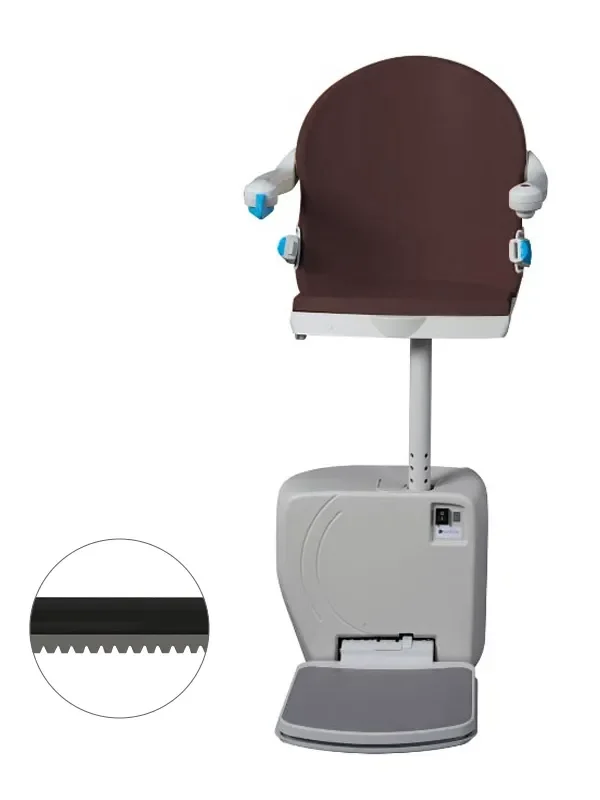
Standing Stair Lifts vs. Standard Straight Stair Lifts: Key Differences
These terms describe different things: standing or perching describes travel posture; straight describes the rail route. A straight stairlift may have different seating options. The table compares supported perch and seated configurations, not two mutually exclusive staircase types.
| Feature | Supported perch configuration | Seated configuration |
|---|---|---|
| Position | Partly seated, more upright support | Seated travel position |
| Space | Measure the exact user and configuration | Measure the exact user and configuration |
| Support needs | Assess posture, restraints and assistance | Assess seating, restraints and assistance |
| Comfort | Check the proposed seat and foot support | Check the proposed seat and foot support |
| Assessment | Individual assessment, not diagnosis alone | Individual assessment, not diagnosis alone |
Choose the rail route and travel position as separate parts of the assessment. Ask the installer to confirm that the proposed combination is available, fits the staircase and meets the person’s support needs.
Safety Features to Look for in a Standing Stair Lift
When comparing a standing stair lift, review the exact model’s instructions and included safety equipment. Features do not eliminate the possibility of injury. Ask how each feature operates and what the user or helper must do.
Safety Questions to Ask About the Proposed Configuration:
- Which obstruction sensors are included, and where do they detect an obstruction?
- Which belt or restraint is specified, and how must it be fitted and used?
- How should the user position their feet on the proposed footrest or platform?
- How do the travel controls and stopping functions operate on this model?
- What operation is possible during a power outage, and what charging or battery limits apply?
- How does the lift start and stop, and what support or assistance is needed?
Standing Stair Lift Costs and Installation Requirements
There is no single standing or perch stairlift price that applies to every home. Request a written, itemized quote for the exact model, rail route, seating option, installation work and service terms. Compare quotes on the same scope rather than assuming perch and seated configurations cost the same.
Installation Requirements
- Secure rail mounting: Ask the installer to confirm the mounting method and staircase requirements for the proposed system.
- Power supply: Confirm the charging supply, outlet location and any electrical work required.
- Clearance space: Measure headroom, travel clearance and access at both landings for the actual user and configuration.
- Professional installation: Ask who will install, commission and demonstrate the system, and what service support is included.
Before installation, ask for the proposed layout, preparation work, operating instructions and handover process. Confirm access at both landings and how the person will get on and off; professional installation alone is not a guarantee of individual suitability or comfort.
How to Choose the Right Standing Stair Lift for Your Home
Start with the staircase route and the person’s travel and transfer needs. Have the installer measure the full route, headroom, obstructions and landing access. Discuss any difficulty with posture, balance or transfers with a qualified healthcare professional as well; narrow stairs or a diagnosis alone do not establish that a perch configuration is appropriate.
Compare the proposed seat, foot support, restraints and controls, including any help needed to operate them. Ask for the exact configuration’s capacity, service requirements, warranty terms and ongoing costs in writing. Confirm current local availability rather than assuming every seating option is offered for every rail system.
Conclusion: Are Standing Stair Lifts Worth It for Home Mobility?
A supported perch configuration may be worth discussing when a fully seated position is difficult. It is not automatically the right choice for narrow stairs or anyone who can stand. Decide only after reviewing the person’s support needs, the measured route and the exact product’s instructions and limits.
Contact HomePro Mobility to discuss the staircase and questions to cover in an assessment. Ask which models and seating options are currently available, what installation work is proposed and what service arrangements apply.
Frequently Asked Questions
Can a Standing Stair Lift Be Installed on Any Staircase?
No single configuration fits every staircase. Standing or perching describes the travel position, not whether the rail is straight or curved. Ask the installer to confirm which rail and seating combinations are available for the measured route, including any turns or landings.
How Much Space Does a Standing Stair Lift Take Up?
Space requirements depend on the model, seating option, user and staircase. Ask for measured travel clearance, headroom, landing access and the space remaining for other stair users. A perch option may help in some layouts, but a fit must be checked rather than assumed.
What Is the Weight Capacity for a Standing Model?
Use the capacity specified for the exact model and seating option, not a general range for standing lifts. Ask the installer to confirm that limit in writing and check it against the manufacturer’s current instructions. A different seat or configuration may have a different limit.

Our Manufacturing Partners · Blog · Resources · Stairlifts · Ramps · All solutions · About · Contact
Restoring Independence. Improving Lives.