
A lift for home use typically comes in wall-mounted or rail-mounted options. Most modern stairlift installation options are fixed to the stair treads rather than to the wall. This provides better stability and safety. It also helps preserve the home’s structure. Understanding these stair lift installation requirements is important for seniors planning daily mobility. AARP research shows that around 77% of adults aged 50 and above prefer to age in place, making stairlifts a practical solution for maintaining independence at home.
What is a Rail-Mounted Stairlift? (The Standard Choice)
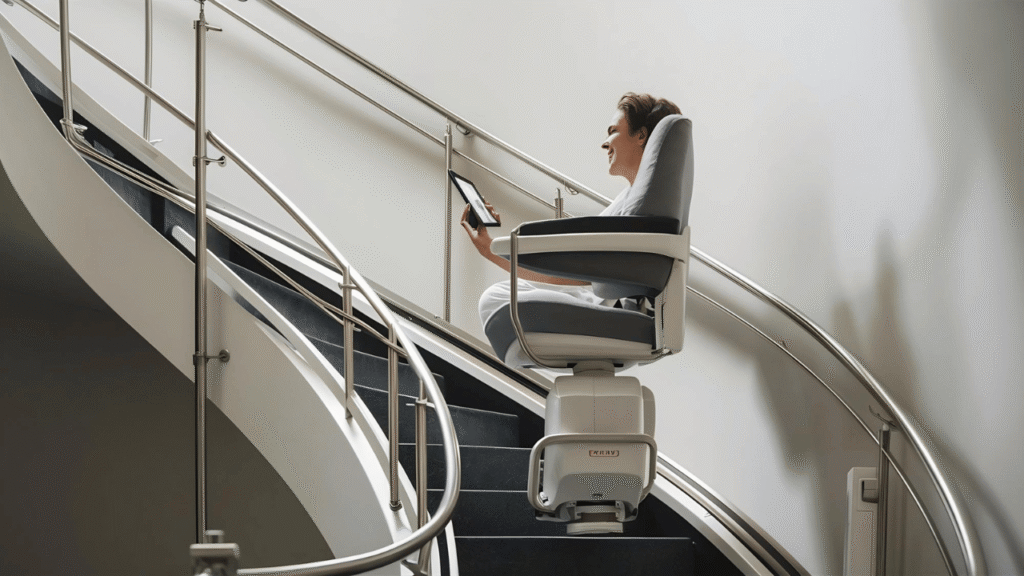
A rail-mounted stairlift is a motorized chair that travels along a metal track fixed directly to the stair treads using heavy-duty brackets. It does not attach to the wall and instead uses the staircase for full structural support. This is the most common option for residential stairlift installation because it keeps the walls untouched and maintains the home’s original structure.
It offers strong stability by distributing the user’s weight evenly across multiple steps, resulting in a smooth and steady ride. The system is designed to work on wood, concrete, and metal staircases. The rail is installed close to the steps and supported at regular points, so it does not obstruct normal foot movement on the stairs. Installation is minimally invasive, and removal later leaves only small marks that can be repaired easily, helping preserve the home’s condition and value.
The Truth About Wall-Mounted Stairlift Installation
Stairlifts in homes are rarely wall-mounted. Most interior walls are made of drywall with wooden studs, which are not strong enough to hold the weight of a moving lift and user. Over time, this can lead to loosened fittings or wall damage if used for support.
Because of this, stairlift installation is usually done on the stair treads instead. The steps provide a stronger and more stable base for the rail system. Wall-mounted setups would need internal reinforcement like steel plates or added timber, which increases the cost of stair lift installation.
Rail-mounted systems are the standard choice for residential homes. Wall mounting is only used in rare cases, such as reinforced structures or special staircase designs where tread installation is not possible.
Wall-Mounted vs. Rail-Mounted Stairlifts: Key Differences
The main difference lies in how each system is supported. Rail-mounted stairlifts use the strength of the staircase itself, while wall-mounted systems depend on the wall structure for support. Both can provide safe stair lift options for seniors and a reliable lift for home use, but their installation and impact on the property are very different.
| Feature | Rail-Mounted Stairlift (Standard) | Wall-Mounted Stairlift (Specialty) |
| Mounting Point | Stair treads (steps) | Wall studs or concrete |
| Staircase Type | Straight or curved | Mostly straight stairs |
| Home Impact | Small screw marks, easy repair | Larger wall repairs are needed |
| Installation Time | 2-4 hours | Longer, needs reinforcement |
Straight and curved stair lifts typically use rail-mounted systems. This keeps installation stable, even on complex layouts, without major changes to the home.
Cost of Stair Lift Installation: Wall vs. Rail Comparison
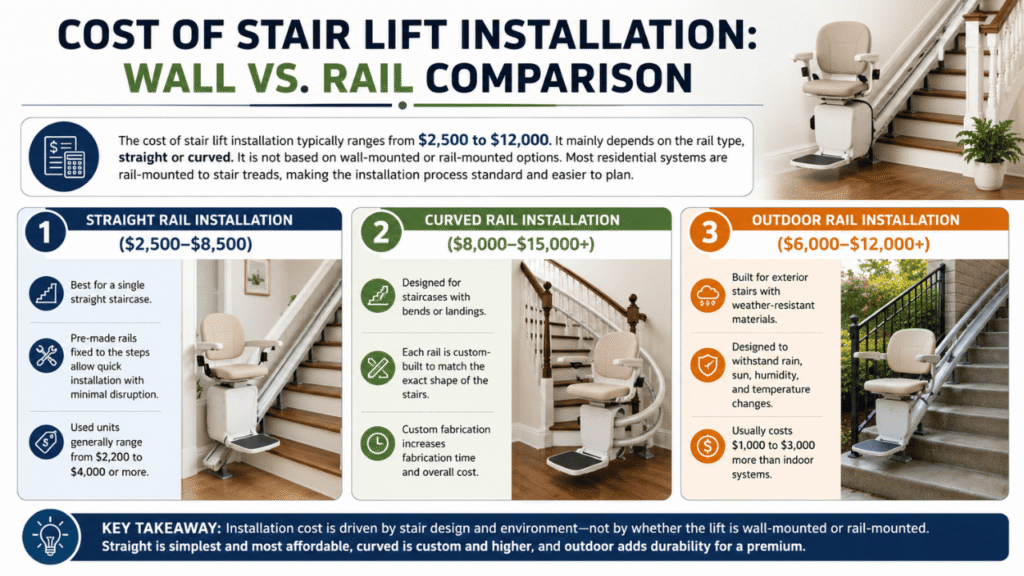
The cost of stair lift installation typically ranges from $2,500 to $12,000. It mainly depends on the rail type, straight or curved. It is not based on wall-mounted or rail-mounted options. Most residential systems are rail-mounted to stair treads, making the installation process standard and easier to plan.
- Straight Rail Installation ($2,500-$8,500): Best for a single straight staircase. These systems use pre-made rails fixed to the steps, allowing quick installation with minimal disruption. Used units generally range from $2,200 to $4,000 or more.
- Curved Rail Installation ($8,000-$15,000+): Designed for staircases with bends or landings. Each rail is custom-built to match the exact shape of the stairs, which increases fabrication time and overall cost.
- Outdoor Rail Installation ($6,000-$12,000+): Built for exterior stairs with weather-resistant materials. These models usually cost $1,000 to $3,000 more than indoor systems.
Key Factors to Consider Before Your Stairlift Installation
Installing a stairlift needs proper planning to ensure safety and long-term use. Before the stairlift installation, a few key points should be checked:
- Staircase Dimensions: Straight stairs use standard rails, while curved stairs need custom-built rails. Most installations require 28-30 inches (71-76 cm) of width. Clear any doors, radiators, or obstacles along the rail path.
- User Needs: Select a model with the correct weight capacity. Safety features such as swivel seats, seat belts, and obstruction sensors help ensure safe use.
- Power Requirements: A standard GFI outlet is required near the top or bottom of the stairs to charge the unit.
- Budget & Warranty: Cost depends mainly on rail type and features. A strong warranty helps protect the investment.
- Professional Installation: Trained technicians should install the system securely on stair treads to ensure safety and proper performance.
Conclusion: Which Stairlift Installation Option is Best for Your Home?
Rail-mounted stairlifts remain the most reliable and widely used option for residential homes due to their stability, safety, and compatibility with most staircases. Wall-mounted systems are rarely used and are only suitable in specific structural cases. For most homeowners, a tread-mounted stairlift offers better long-term value, easier maintenance, and safer everyday mobility across different home layouts.
At HomePRO Mobility, we provide safe and reliable stairlift installation solutions for your home. Whether you choose a rail-mounted system for stability or need guidance on the right setup, our team ensures proper fitting on stair treads for lasting safety. With professional installation and trusted support, we help you stay independent at home.
Frequently Asked Questions
Will Stairlift Installation Damage My Stairs or Carpet?
No, stairlift installation does not cause major damage. Rail-mounted systems are fixed to the stair treads, not the wall or carpet. Only small screw holes are used, which can be easily repaired if the lift is removed.
Is a Rail-Mounted Stairlift Safe for All Homes?
Yes, rail-mounted stairlifts are designed for most residential homes. They provide strong stability by attaching directly to stair treads and are suitable for straight and curved staircases when properly installed by professionals.
Which Stairlift Is Better for Narrow Staircases?
Slimline rail-mounted stairlifts are best for narrow staircases. They fold neatly when not in use, keeping enough space for other users to walk safely on the stairs.
