
Fall prevention for seniors starts at home. Many falls occur due to everyday hazards such as slippery bathroom floors, poorly lit hallways, or stairs that have become difficult to use safely. A room-by-room home safety checklist for seniors can help identify problem areas and reduce risks before an injury occurs. The bathroom is often the first place that deserves attention.
How Can You Improve Bathroom Safety for the Elderly?
The bathroom is one of the highest-risk areas for falls because it combines wet surfaces, hard flooring, and frequent sitting, standing, and turning movements. A few targeted upgrades can significantly improve safety and independence.
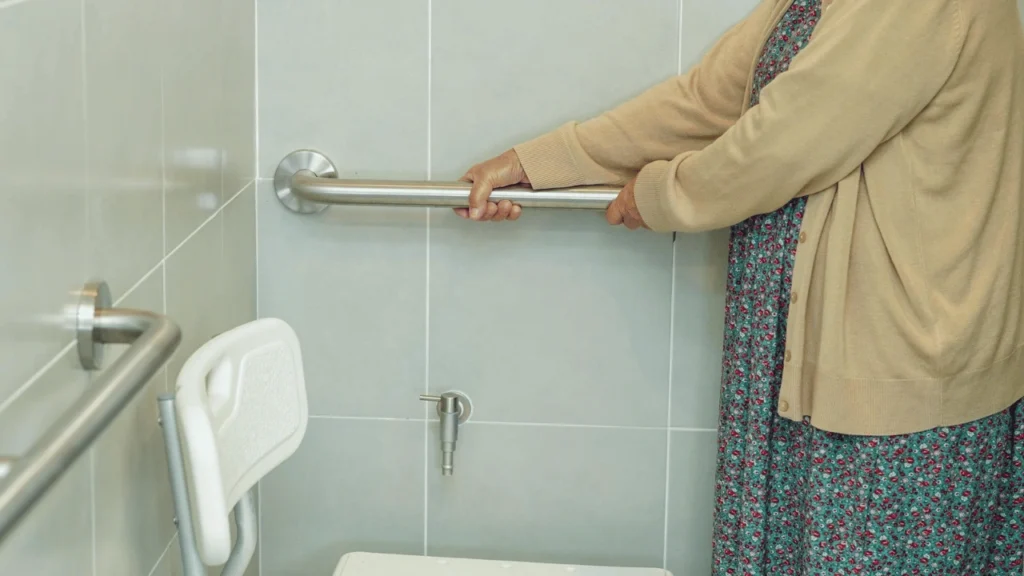
Start by installing professionally mounted grab bars beside the toilet and inside the shower or bathtub. Unlike towel racks, grab bars are designed to support body weight and provide stability during transfers. Add non-slip mats inside and outside the bathing area, and remove any loose rugs that could create tripping hazards.
Improving accessibility is equally important. Consider a raised toilet seat or comfort-height toilet to reduce strain when sitting and standing. Keep toiletries and towels within easy reach to avoid bending or stretching on slippery floors. Bright overhead lighting and motion-activated nightlights can improve visibility, especially during nighttime bathroom visits. For greater accessibility, walk in Bathtubs for seniors and barrier-free showers can make bathing safer and more comfortable.
What Are the Best Indoor Stairlift Options for Multi-Level Homes?
For homeowners who want to maintain access to every floor of their house, a chair lift for stairs can provide a practical solution. These systems reduce the physical strain of climbing stairs and help lower fall risk.
The best indoor stairlift options depend on your staircase layout. Straight stairlifts work well for single-flight staircases, while curved stairlifts are designed for stairs with turns, curves, or landings.
| Stairlift Type | Best For | Key Features |
| Straight Stair lift | Single-flight staircases | Simple installation, foldable seat, compact design |
| Curved Stair lift | Stairs with turns, curves, or landings | Custom-built rail, smooth navigation through complex layouts |
| Heavy-Duty Stair lift | Users needing a higher weight capacity | Wider seat, reinforced frame, added comfort |
| Platform Stairlift | Wheelchair users | Allows travel while remaining in a wheelchair |
Popular stairlifts for seniors citizens include straight and curved models for different staircase layouts. Many feature battery backup, foldable seats, swivel seating, seat belts, and obstruction sensors for added safety and convenience.
How Do You Achieve Elderly Falling Out of Bed Prevention?
Many nighttime falls happen when older adults roll out of bed or get up in low-light conditions. These simple steps can improve bedroom safety.
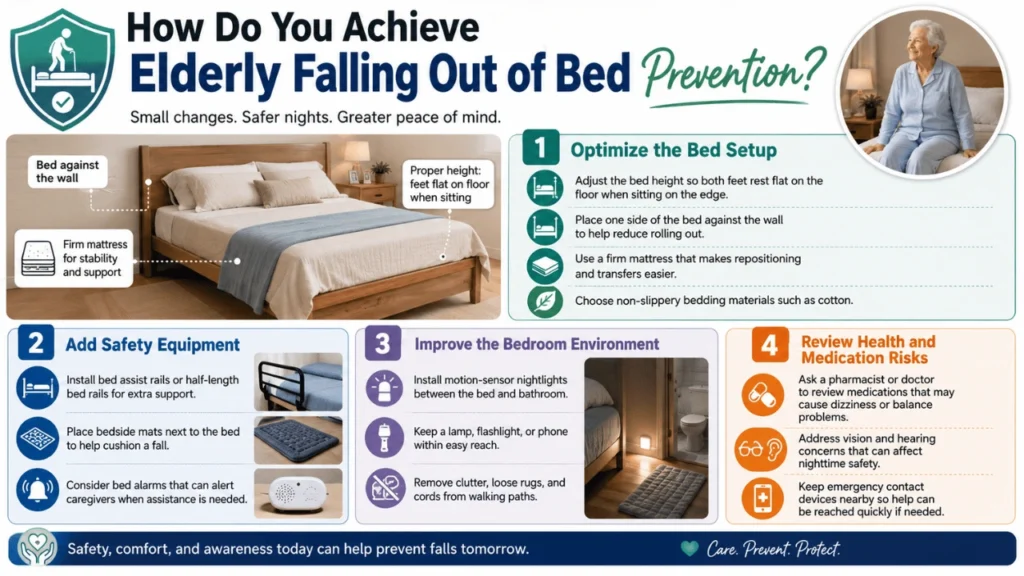
1. Optimize the Bed Setup
- Adjust the bed height so both feet rest flat on the floor when sitting on the edge.
- Place one side of the bed against the wall to help reduce rolling out.
- Use a firm mattress that makes repositioning and transfers easier.
- Choose non-slippery bedding materials such as cotton.
2. Add Safety Equipment
- Install bed assist rails or half-length bed rails for extra support.
- Place bedside mats next to the bed to help cushion a fall.
- Consider bed alarms that can alert caregivers when assistance is needed.
3. Improve the Bedroom Environment
- Install motion-sensor nightlights between the bed and bathroom.
- Keep a lamp, flashlight, or phone within easy reach.
- Remove clutter, loose rugs, and cords from walking paths.
4. Review Health and Medication Risks
- Ask a pharmacist or doctor to review medications that may cause dizziness or balance problems.
- Address vision and hearing concerns that can affect nighttime safety.
- Keep emergency contact devices nearby so help can be reached quickly if needed.
Which Living Room Modifications Keep Seniors Safe and Mobile?
Living rooms often have fall hazards that are easy to overlook, including throw rugs, electrical cords, cluttered walkways, and low, soft furniture. Remove loose rugs or secure them firmly to the floor. Keep cords tucked along walls, and make sure walking paths stay clear and wide enough for a cane or walker.
The type of furniture you use can also affect safety. Deep, overly soft couches may be comfortable, but they can make it harder to stand up without assistance. Chairs with firm cushions and proper support make sitting and standing easier.
For older adults who need extra help, power lift chairs for elderly individuals can gently raise and tilt forward to assist with standing. Many homeowners choose them as some of the best mobility chairs for seniors because they offer reliable support while remaining comfortable for everyday use.
How Do You Modify a House for Senior Citizens at the Main Entrance?
The main entrance should provide safe, easy access in all weather conditions. Uneven walkways, steps, and high thresholds can increase fall risks, especially for older adults using mobility aids.
Ensure pathways are level, well-maintained, and well-lit with motion-activated lighting. If stairs have become difficult to navigate, wheelchair ramps for home can create a safer, more accessible entry point.
For temporary or changing needs, portable aluminum ramps offer a lightweight and practical solution that can be installed quickly. These modifications help improve accessibility while supporting independence and safety at home.
Final Fall Prevention Checklist for Seniors
Fall prevention for seniors is most effective when you address risks throughout the entire home, not just in one room. You can significantly reduce common fall hazards by upgrading your bathroom, stairs, bedroom pathways, furniture, and entryways. Making these strategic adjustments helps you maintain greater independence. Small home modifications made today ensure a safer, more comfortable living environment for years to come.
At HomePRO Mobility, we help families create safer homes with trusted accessibility solutions. From stairlifts and ramps to walk-in tubs and barrier free showers, our team provides expert guidance and professional installation. We’ll help you find practical solutions that support safety, comfort, and independent living at home.
Frequently Asked Questions
Start with simple, low-cost changes such as removing loose throw rugs, improving lighting, securing electrical cords, and adding non-slip mats in the bathroom. Rearranging frequently used items so they are easy to reach can also help reduce unnecessary bending, stretching, and climbing.
Use bright, glare-free lighting throughout the home, especially in hallways, stairways, bedrooms, and bathrooms. Motion-activated nightlights along common walking paths can improve visibility and help prevent falls during nighttime trips.
If using stairs or entry steps has become difficult, painful, or unsafe, it may be time to consider an accessibility solution. Stairlifts help improve access between floors inside the home, while ramps provide safer entry and exit at doorways and exterior entrances.
