
Does Insurance Cover Stairlifts in Georgia? Many Georgia homeowners are surprised to learn that stairlifts are generally not covered by Original Medicare or standard private health insurance. This is because they are considered home modifications rather than Durable Medical Equipment (DME). However, some alternative funding sources, grants, and assistance programs may help eligible residents reduce costs. Understanding your options may help you make a more informed and financially responsible decision.
Does Original Medicare or Private Insurance Cover Stairlifts in Georgia?
In most cases, no. Original Medicare generally does not cover residential stairlifts. They are considered home modifications rather than Durable Medical Equipment (DME). Since stairlifts are permanently installed as part of the home, they typically fall outside Medicare’s coverage guidelines.
Most private health insurance plans in Georgia follow similar standards. Stairlifts are generally classified as home accessibility modifications rather than medical treatment equipment. Because of this distinction, direct reimbursement through private insurance is uncommon.
However, a lack of Medicare or private insurance coverage does not necessarily mean you are out of options. While traditional health insurance rarely pays for stairlifts, some homeowners may qualify for alternative funding sources. Assistance programs, veterans’ benefits, and financing options may also be available to help reduce out-of-pocket costs.
Does Medicare Advantage Cover Home Modifications?
Some Medicare Advantage plans may offer supplemental benefits for certain home safety and accessibility improvements. Coverage varies by provider and plan, so it’s important to verify benefits before purchasing a stairlift.
Ask your plan whether stairlift-related home accessibility benefits are available:
- Whether home accessibility improvements are included as a supplemental benefit
- Whether residential stairlifts are covered or excluded
- What medical documentation may be required
- Whether prior authorization is needed before installation
- What out-of-pocket costs may apply
The best way to determine eligibility is to contact your Medicare Advantage provider directly and review your specific plan benefits.
Are There Stair Lift Grants for Seniors in Georgia?
If insurance coverage is unavailable, some homeowners explore alternative assistance programs. Several organizations may help connect eligible residents with accessibility funding resources, including:
- Georgia Area Agencies on Aging (AAA)
- Medicaid waiver programs
- Veterans Affairs housing assistance programs
- Local community assistance organizations
- State accessibility improvement initiatives
Availability, eligibility requirements, and funding levels might vary by program. Because assistance options change periodically, it is important to confirm current requirements before applying.
Many families researching stair lift grants for seniors in Georgia find that these programs can sometimes provide more practical support than traditional insurance coverage.
How Much Does a Stairlift Cost in Georgia?
The answer largely depends on your staircase’s design and the type of stairlift required in Georgia.
| Stairlift Type | Typical Georgia Price Range |
| Straight Stair lift | $2,900 to $5,500 |
| Curved Stair lift | $9,500 to $25,000+ |
| Outdoor Stair lift | Varies by staircase and installation requirements |
Straight stairlifts are typically the most affordable option because they use standardized rails and can be installed more quickly.
Curved stairlifts cost significantly more because they require custom-manufactured rails designed to fit staircases with turns, landings, or unique layouts.
Outdoor stairlifts vary in price based on the staircase and typically include weather-resistant materials and specialized components for outdoor use.
Additional features such as higher weight capacities, power swivel seats, folding rails, and other customization options can also affect the final cost. For the most accurate estimate, homeowners should schedule an in-home measurement and consultation.
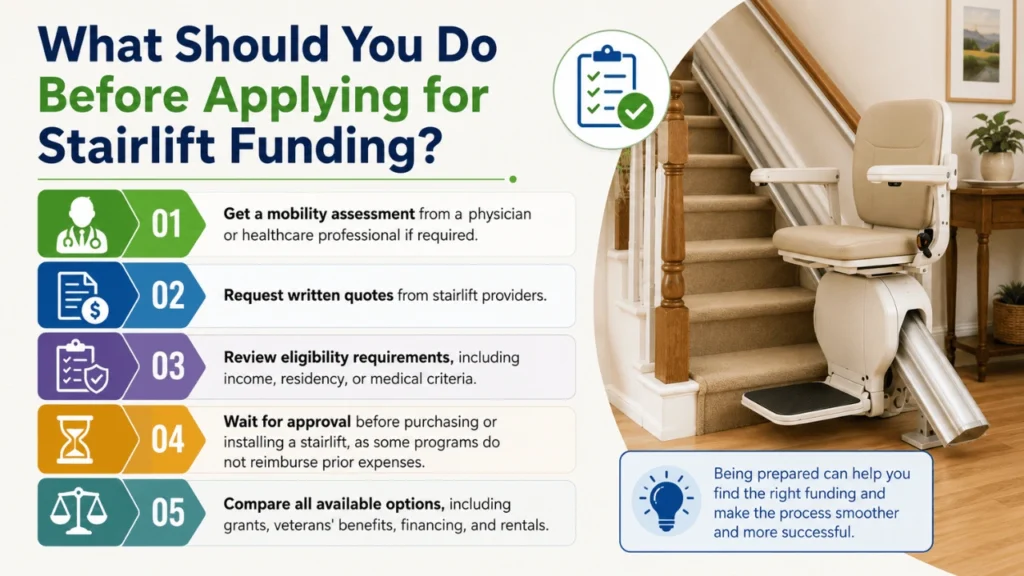
What Should You Do Before Applying for Stairlift Funding?
Before applying for stairlift funding, make sure you have the necessary documentation and understand the program requirements.
- Get a mobility assessment from a physician or healthcare professional if required.
- Request written quotes from stairlift providers.
- Review eligibility requirements, including income, residency, or medical criteria.
- Wait for approval before purchasing or installing a stairlift, as some programs do not reimburse prior expenses.
- Compare all available options, including grants, veterans’ benefits, financing, and rentals.
Taking these steps early can help streamline the application process and identify the funding options that best fit your needs.
Key Takeaways: Medicare and Insurance Coverage for Stairlifts in Georgia
Although stairlifts are typically not covered by Original Medicare or most private insurance plans in Georgia, homeowners still have several pathways to reduce costs. Exploring Medicare Advantage benefits, local assistance programs, veterans’ resources, and financing options can uncover valuable support. Taking time to evaluate all available solutions helps ensure a safer home environment while maximizing affordability and long-term independence.
At HomePRO Mobility, we help Georgia homeowners explore stairlift solutions that fit their mobility needs, home layout, and budget. Our team provides in-home assessments, professional installation, rental options, and guidance on available financing programs. We make it easier to find a safe and practical stairlift solution for maintaining independence at home.
Frequently Asked Questions
Some long-term care insurance policies can provide benefits for home accessibility improvements that support independent living. Coverage may depend on the specific policy terms and eligibility requirements.
Many stairlift providers offer financing programs that allow homeowners to spread costs over time. Financing options vary by provider and credit approval requirements.
Yes. Rental stair lifts are often available for temporary needs such as injury recovery, post-surgical rehabilitation, or short-term mobility challenges.
Some funding programs and Medicare Advantage plans may require medical documentation or a physician’s recommendation before considering assistance. Requirements vary by provider and program, so it is important to verify eligibility before applying.
Yes. Eligible veterans may qualify for home accessibility assistance through certain U.S. Department of Veterans Affairs (VA) housing grant programs. Eligibility depends on service history, disability status, and program requirements.
