
Home safety tips for elderly parents start with safer, easier daily spaces. Aging-in-place home modifications can reduce fall risk and improve daily mobility. Start with a room-by-room safety check. Then focus on bathrooms, stairs, lighting, floors, furniture, and emergency access. These steps help caregivers support comfort, confidence, independence, and safer aging at home.
How Can Caregivers Identify Home Safety Risks for Elderly Parents?
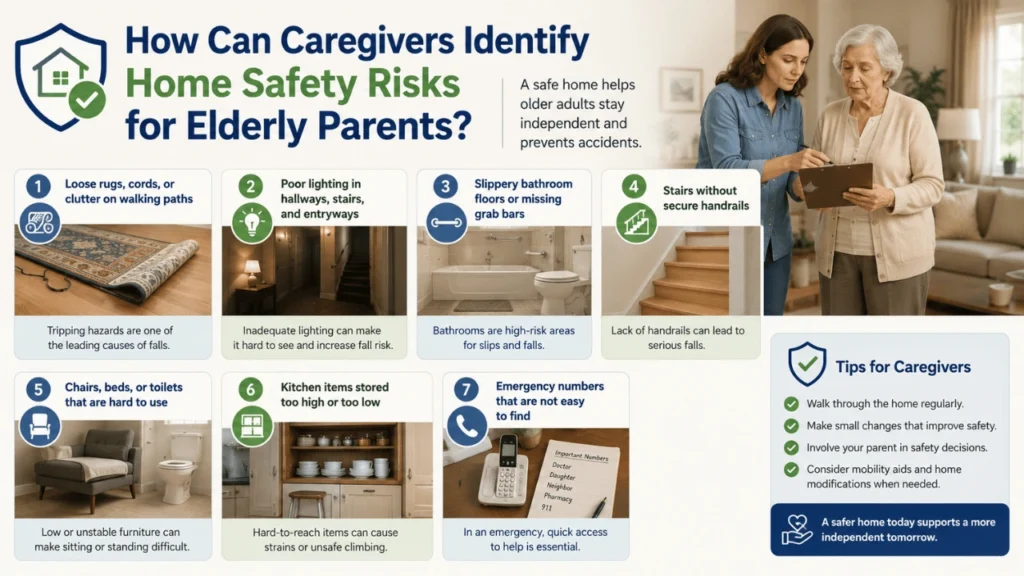
Caregivers can identify home safety risks for elderly parents through a simple room-by-room check. Walk through the home with your parent and watch how they move. Look for fall risks, poor lighting, hard-to-reach items, and areas where they need extra support.
Check these common safety risks:
- Loose rugs, cords, or clutter on walking paths
- Poor lighting in hallways, stairs, and entryways
- Slippery bathroom floors or missing grab bars
- Stairs without secure handrails
- Chairs, beds, or toilets that are hard to use
- Kitchen items stored too high or too low
- Emergency numbers that are not easy to find
Also, notice how your parent moves during daily tasks. Trouble standing, climbing stairs, bathing, or reaching items can signal hidden safety risks. If concerns continue to grow, a professional home safety assessment can help identify safer changes.
Read more: Home modification guide for elderly parents.
Best Home Safety Tips for Elderly Parents to Prevent Falls
Falls often occur when everyday spaces become harder to navigate. After identifying safety risks, caregivers should focus on simple changes to improve steadiness during movement. These changes should support balance, visibility, and safe access during everyday routines.
Use this fall prevention checklist for elderly parents in high-use areas. Keep walking paths wide and clear. Move small furniture, shoes, cords, and baskets away from hallways. If rugs slide or curl at the edges, remove them or secure them firmly.
Lighting also matters, especially at night. Add brighter bulbs in hallways, bedrooms, stairs, and entryways. Motion-sensor nightlights can help during late bathroom trips. Keep a lamp within easy reach near the bed.
Supportive furniture can also reduce fall risks. Choose chairs with armrests and firm seats. Make sure beds are not too high or too low. Your parents’ feet should touch the floor when sitting on the bed’s edge.
Keep daily items within easy reach. Store dishes, clothes, medicines, and personal items at waist level. This helps reduce bending, climbing, or stretching. Also, keep a phone or emergency device nearby in frequently used rooms.
Small changes can make the home feel safer and easier to use. They also help caregivers reduce daily fall risks without changing the whole house at once.
Bathroom Home Safety Tips for Elderly Parents
Bathrooms are one of the most important areas for senior home safety. Wet floors, low toilets, and bathtub edges can make daily routines harder. Bathroom safety equipment for elderly parents can improve support and access.
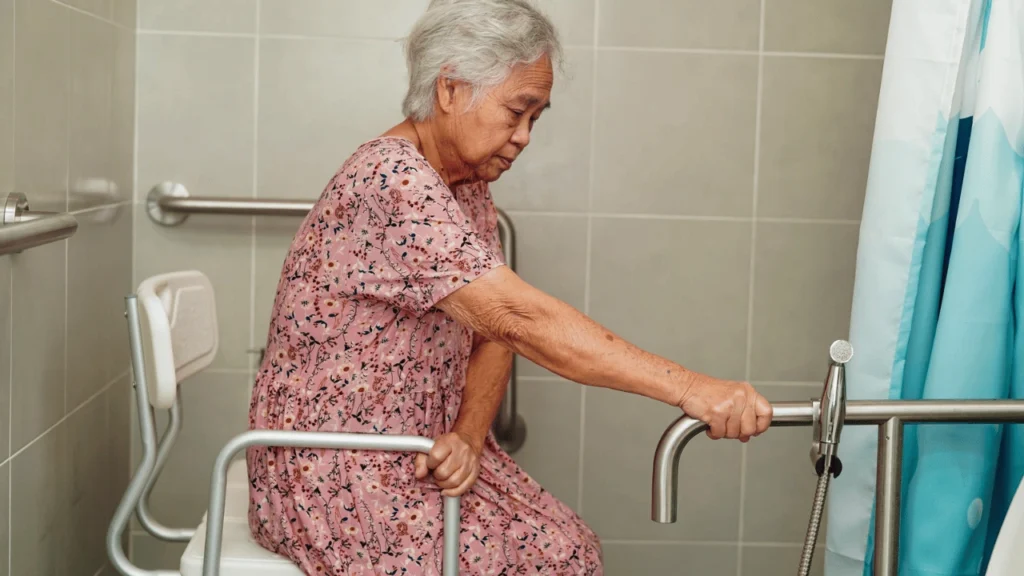
Start by adding grab bars near the toilet, shower, and bathtub. These bars give elderly parents steady support while sitting, standing, or stepping inside. Avoid using towel racks for support. They are not designed to hold body weight.
Non-slip surfaces are also important. Use non-slip mats both inside and outside the shower. Remove loose bathroom rugs that can slide or curl. Keep soap, shampoo, towels, and toiletries within easy reach. A raised toilet seat can also make standing and sitting easier.
A shower chair or transfer bench can help if standing feels tiring. A handheld showerhead can also make bathing easier while seated. A walk-in shower, walk-in tub, or barrier-free shower may support safer access.
Good lighting matters too, especially at night. Add motion-sensor nightlights on the way to the bathroom. Keep the floor clear so your parent does not trip during late-night bathroom visits. A few bathroom changes can reduce daily stress for caregivers. They can also help elderly parents feel safer during private routines.
Stair and Entryway Safety Tips for Elderly Parents
Stairs and entryways can become risky when balance, vision, or strength changes. Caregivers should make these areas clear, bright, and easy to grip. Even small changes can make daily movement safer.
Start by checking the stairs from top to bottom. Make sure each step is clear and easy to see. Remove shoes, boxes, rugs, and loose items from stairways. Nothing should be stored on the steps.
Handrails are also important. Stairs should have sturdy handrails that are easy to hold. If possible, add handrails on both sides. This gives elderly parents better support while going up or down. Lighting should be bright near stairs, landings, and entry doors. Add light switches at the top and bottom of the stairs. Motion-sensor lights can also help during early mornings or evenings.
Entryways should also stay clutter-free. Remove loose mats that can slide. Mark raised thresholds clearly, or use small threshold ramps where needed. A stable chair or bench near the door can also help with shoes. If stairs still feel unsafe, consider stronger home access support. This may include a stairlift, ramp, or vertical platform lift. These options can help elderly parents stay in their homes longer.
When Should Caregivers Consider Home Mobility Equipment?
Caregivers should consider home mobility equipment when daily movement becomes unsafe or stressful. Small changes can help, but some situations need stronger support. Equipment may help if your parent avoids stairs or struggles in bathrooms. It can also help when entering the home becomes difficult.
| Safety Concern | Mobility Equipment That May Help |
| Trouble climbing stairs | Stairlift |
| Difficulty entering the home | Wheelchair ramp |
| Fear of slipping in the bathroom | Walk in tub or barrier-free shower |
| Trouble standing from a chair | Lift chair |
| Wheelchair use inside the home | Wider pathways or threshold ramps |
| Difficulty moving between levels | Vertical platform lift |
The right option depends on mobility needs, wheelchair accessibility, layout, and routine. A professional assessment can help caregivers choose safer changes without guessing.
Final Thoughts on Home Safety Tips for Elderly Parents
Home safety tips for elderly parents should make daily life safer, easier, and less stressful. Caregivers can make safer choices one area at a time. Thoughtful updates can reduce fall risk and build confidence at home.
At HomePRO Mobility, we help families create safer and more accessible homes. Our team offers stairlifts, ramps, walk-in tubs, and barrier-free showers. We also provide practical guidance and professional installation. The right home changes can support comfort, safety, and independent living.
Frequently Asked Questions
Caregivers should review home safety every few months. They should also check after a fall, surgery, illness, or a change in mobility.
The bathroom is often the best place to start. Wet floors, low toilets, and tubs can create serious safety concerns.
Start with small changes that protect comfort and independence. Explain that safety updates help them stay at home longer.
Get professional help when falls happen, stairs feel unsafe, or daily tasks become stressful. An expert can recommend safer home modifications.
