
Fall prevention home mods Loganville families are searching for aren’t complicated or expensive. Approximately one in four adults aged 65 and older falls each year in the United States, and over two million end up in emergency departments annually. The good news is that targeted home modification programs have been shown in clinical studies (including findings published in The Lancet) to significantly reduce fall risk and related injuries, with reductions varying by intervention type.
Key Takeaways
- One in four adults 65+ falls each year; most falls happen indoors from preventable hazards.
- Home modification costs range from under $500 for DIY upgrades to $15,000 for full renovations, far less than assisted living.
- Georgia residents may qualify for state, federal, and nonprofit grants to offset costs.
Why Falls Are a Critical Concern for Aging Adults and How to Prevent Them
The numbers are hard to ignore. One in four adults aged 65 and older falls each year, and many of those falls happen right at home, in familiar spaces people have lived in for decades. Loose rugs, poor lighting, and slippery bathroom surfaces are the usual culprits. Many of these hazards are preventable with simple modifications.
According to a 2018 AARP survey, three out of four adults aged 50 and older want to stay in their homes and communities as they age. That desire is completely achievable with the right changes. A fall-risk assessment home walkthrough, ideally done with an occupational therapist, can reveal hazards you might miss when you’re used to a space.
Bathrooms are among the highest-risk areas, and research shows that roughly 11.4% of poor-lighting falls happen specifically in the toilet or shower area, with about half occurring in the bedroom.
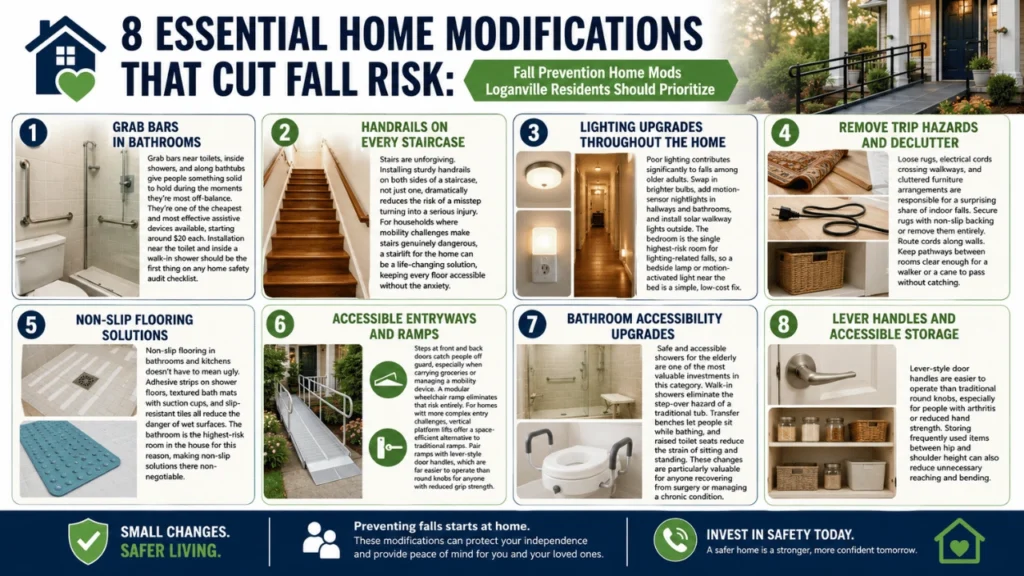
8 Essential Home Modifications That Cut Fall Risk: Fall Prevention Home Mods Loganville Residents Should Prioritize
1. Grab Bars in Bathrooms
Grab bars near toilets, inside showers, and along bathtubs give people something solid to hold during the moments they’re most off-balance. They’re one of the cheapest and most effective assistive devices available, starting around $20 each. Installation near the toilet and inside a walk-in shower should be the first thing on any home safety audit checklist.
2. Handrails on Every Staircase
Stairs are unforgiving. Installing sturdy handrails on both sides of a staircase, not just one, dramatically reduces the risk of a misstep turning into a serious injury. For households where mobility challenges make stairs genuinely dangerous, a stairlift for the home can be a life-changing solution, keeping every floor accessible without the anxiety.
3. Lighting Upgrades Throughout the Home
Poor lighting contributes significantly to falls among older adults. Swap in brighter bulbs, add motion-sensor nightlights in hallways and bathrooms, and install solar walkway lights outside. The bedroom is the single highest-risk room for lighting-related falls, so a bedside lamp or motion-activated light near the bed is a simple, low-cost fix.
4. Remove Trip Hazards and Declutter
Loose rugs, electrical cords crossing walkways, and cluttered furniture arrangements are responsible for a surprising share of indoor falls. Secure rugs with non-slip backing or remove them entirely. Route cords along walls. Keep pathways between rooms clear enough for a walker or a cane to pass without catching.
5. Non-Slip Flooring Solutions
Non-slip flooring in bathrooms and kitchens doesn’t have to mean ugly. Adhesive strips on shower floors, textured bath mats with suction cups, and slip-resistant tiles all reduce the danger of wet surfaces. The bathroom is the highest-risk room in the house for this reason, making non-slip solutions there non-negotiable.
6. Accessible Entryways and Ramps
Steps at front and back doors catch people off guard, especially when carrying groceries or managing a mobility device. A modular wheelchair ramp eliminates that risk entirely. For homes with more complex entry challenges, vertical platform lifts offer a space-efficient alternative to traditional ramps. Pair ramps with lever-style door handles, which are far easier to operate than round knobs for anyone with reduced grip strength.
7. Bathroom Accessibility Upgrades
Safe and accessible showers for the elderly are one of the most valuable investments in this category. Walk-in showers eliminate the step-over hazard of a traditional tub. Transfer benches let people sit while bathing, and raised toilet seats reduce the strain of sitting and standing. These changes are particularly valuable for anyone recovering from surgery or managing a chronic condition.
8. Lever Handles and Accessible Storage
Lever-style door handles are easier to operate than traditional round knobs, especially for people with arthritis or reduced hand strength. Storing frequently used items between hip and shoulder height can also reduce unnecessary reaching and bending.
What Home Modifications Actually Cost: Budget Breakdown
The cost range is wide, which works in your favor. You can start small and expand over time.
Low-cost DIY (roughly $25 to $500): Grab bars, nightlights, non-slip bath mats, lever handles, and toilet seat risers all fall here. According to Eldercare.gov, minor home repairs and modifications can cost between $150 and $2,000 per house. Most of the highest-impact changes sit at the lower end.
Mid-range professional installations ($1,000 to $10,000): Walk-in showers, stair lifts, modular ramps, and comfort-height toilets require professional installation but deliver substantial safety improvements. If you’re weighing renting vs. buying a stairlift, both options exist, and each has financial trade-offs worth understanding.
Major renovations ($10,000 and up): Full bathroom accessibility remodels, doorway widening for wheelchair access, and structural changes can reach $50,000 or more. The national average for aging-in-place remodeling typically falls between $3,000 and $15,000, according to Consumer Affairs.
The cost comparison highlights the potential long-term value of home modifications. Assisted living costs are often estimated at around $5,500 per month (approximately $66,000 per year), though actual costs can vary depending on location, services, and level of care.
In comparison, even a $15,000 home renovation can represent a significantly lower one-time investment. While exact “payback timelines” will vary, investing in home safety improvements is generally more cost-effective than the ongoing expenses of assisted living or the financial impact of emergency care and unplanned relocation.
Take Action Now: Fall Prevention Home Modifications Loganville Families Can Start Today
Start with a home safety audit. Walk through each room with fresh eyes, or ask an occupational therapist to help identify hazards you’ve stopped noticing. Then prioritize the low-cost changes first: better lighting, grab bars, and decluttered walkways deliver immediate impact for under a few hundred dollars.
Before spending out of pocket, explore the grant programs and nonprofit resources available to Georgia residents. Many seniors qualify for assistance they don’t know exists. The home safety improvements homeowners make today can protect far more than physical safety. They help support independence, confidence, and the ability to remain at home for years to come.
For households with mobility challenges, solutions such as stairlifts Loganville GA residents rely on and professional stairlift installation Georgia services can provide an additional layer of safety and accessibility for aging in place.
Frequently Asked Questions
The most effective modifications address the highest-risk areas first. Grab bars near toilets and in showers, handrails on both sides of staircases, improved lighting with motion-sensor nightlights, non-slip mats and adhesive strips in bathrooms, and lever-style door handles are all proven changes. Removing loose rugs, securing cords, and creating clear pathways through living areas also reduces trip hazards significantly.
Costs vary widely depending on the scope of the project. Low-cost DIY upgrades like grab bars and nightlights can run from $25 to $500, while mid-range professional installations such as walk-in showers and stair lifts typically fall between $1,000 and $10,000. Major structural renovations can exceed $10,000, but even the higher end is far less than the roughly $66,000 annual median cost of assisted living.
Yes, several programs exist. The Georgia Department of Community Affairs runs a grant program targeting low-income elderly homeowners, and the federal USDA Section 504 program offers up to $7,500 for homeowners aged 62 and older. The Atlanta Regional Commission has also distributed over a million dollars in grants through local nonprofits to support aging-in-place modifications across the region. Area Agencies on Aging are a good first call for residents trying to identify what they qualify for.
If you’re also exploring financing specifically for mobility equipment, this guide on how to finance stairlift purchases covers several practical options.
