
Making a shower handicapped accessible usually means improving safety, entry access, and ease of movement during daily use. Many homeowners add barrier-free showers, grab bars, non-slip flooring, seating, and handheld fixtures to create a safer and more comfortable shower space for seniors or people with limited mobility. The right accessibility upgrades depend on the current shower layout, available space, and the level of support needed.
What Makes a Shower Handicapped Accessible?
A handicapped accessible shower removes physical barriers to allow safe entry and exit for people with limited mobility or wheelchair use. Traditional bathtubs require stepping over high aprons, which greatly increases the risk of tripping on wet floors.
An accessible design solves this by focusing on a level surface, a wider entrance, and reachable controls. These aging-in-place modifications replace a dangerous setup with a mobility-friendly shower design, giving seniors and disabled individuals more independence during daily use.
Add Grab Bars for Safer Shower Support
Grab bars help improve stability while entering, exiting, and moving inside the shower. Many homeowners include them in barrier-free showers because they provide extra support on wet and slippery surfaces.
| Grab Bar Placement | Why It Helps |
| Near the shower entrance | Improves balance while stepping in or out |
| Along the side wall | Provides support while standing or turning |
| Near the shower seating | Helps with sitting down and standing up |
| Close to the shower controls | Reduces overreaching on wet surfaces |
Permanent grab bars are usually safer than suction models because they are secured directly into the wall. Many handicap walk-in shower ideas also include textured grab bars for a more secure grip during daily use.
Improve Safety With Non-Slip Shower Flooring
Wet shower floors can become dangerous for seniors and people with limited mobility. Non-slip shower flooring helps improve traction and creates a safer surface during daily use.
| Flooring Option | Why It Helps |
| Textured tile | Improves grip on wet surfaces |
| Slip-resistant vinyl | Adds traction with a softer surface |
| Rubberized flooring | Helps reduce slipping during transfers |
| Anti-slip coatings | Improves safety on existing tile flooring |
Good drainage also plays an important role in barrier-free showers because standing water can increase slip risks and make movement more difficult inside the shower area.
Install Shower Seating for Better Stability and Comfort
Shower seating helps reduce fatigue and provides better stability during bathing for seniors and people with limited mobility.
- Fold-down wall-mounted seats save space when not in use
- Built-in shower benches provide stable long-term support
- Portable shower chairs can be moved when needed
- Transfer benches help wheelchair users move into the shower more safely
Use Accessible Shower Fixtures and Controls
Accessible shower fixtures should be easy to reach and simple to use from both standing and seated positions. Small fixture upgrades can improve comfort and safety without changing the entire shower layout.
- Handheld shower heads for disabled users improve flexibility during bathing.
- Lever handle faucets are easier to use than small twisting knobs.
- Anti-scald controls help maintain safer water temperatures.
- Adjustable shower heads improve seated accessibility.
- Large control handles are easier to grip with limited hand strength.
These shower accessibility upgrades are commonly included in universal design bathroom planning because they improve daily usability for seniors and people with limited mobility.
Can You Convert an Existing Shower Into a Handicap Accessible Shower?
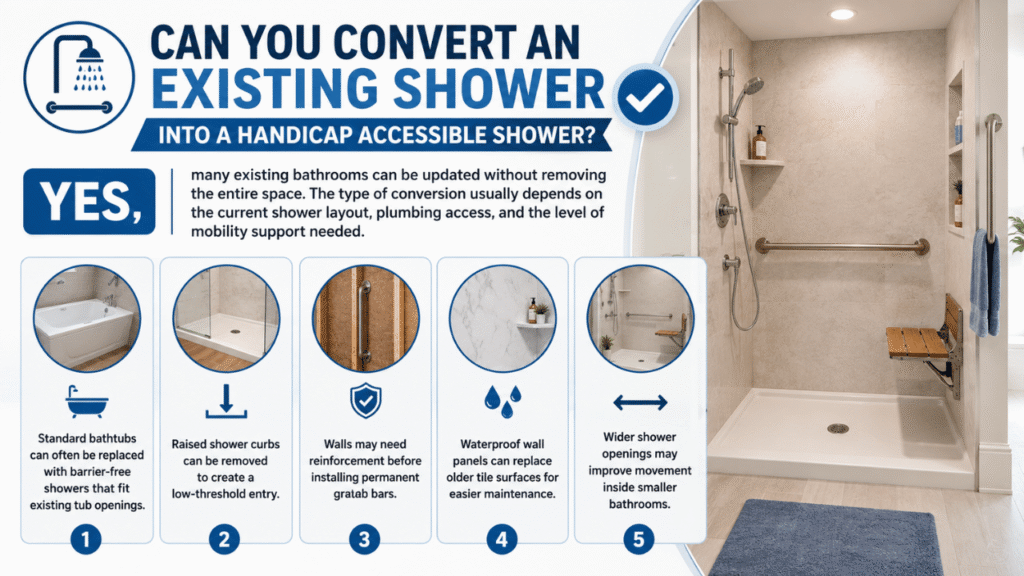
Yes, many existing bathrooms can be updated without removing the entire space. The type of conversion usually depends on the current shower layout, plumbing access, and the level of mobility support needed.
- Standard bathtubs can often be replaced with barrier-free showers that fit existing tub openings.
- Raised shower curbs can be removed to create a low-threshold entry.
- Walls may need reinforcement before installing permanent grab bars.
- Waterproof wall panels can replace older tile surfaces for easier maintenance.
- Wider shower openings may improve movement inside smaller bathrooms.
For homeowners researching “how to make your shower handicapped accessible,” a professional assessment can help determine whether the current shower can support a safer and more practical conversion.
Final Verdict on Designing a Handicapped Accessible Shower
Building a safer shower space often starts with removing common fall risks and improving everyday accessibility. By replacing high tub thresholds with a level entry and adding proper support features, many homeowners can create a more practical and comfortable setup for aging in place.
Because every bathroom has a different layout, upgrading to a mobility-friendly shower design requires careful attention to drainage, wall reinforcement, and available floor space. When you are ready to evaluate your options, working with experienced accessibility specialists can help ensure the shower is safe, functional, and built for long-term daily use. Reach out to our local mobility experts to learn more about barrier-free shower solutions for your home.
Frequently Asked Questions
What Is the Difference Between a Roll-In Shower and a Walk-In Shower?
When deciding between a roll-in shower vs. a walk-in shower, the main difference is the floor transition. A roll-in shower uses a completely barrier-free entry that allows wheelchair access without stepping over a raised edge. A walk-in shower usually includes a low threshold that is easier and safer to step over than a traditional bathtub or shower curb.
Where Should Grab Bars Be Placed in a Shower?
Grab bars are commonly installed near the shower entrance, alongside walls, and close to seating areas where extra balance support may be needed during daily use.
Can an Existing Shower Be Converted into a Handicap Accessible Shower?
Yes. Many existing showers can be updated with barrier-free entry, grab bars, seating, handheld fixtures, and non-slip shower flooring without rebuilding the entire bathroom.
