
Standing stair lifts are practical mobility solutions that help users move between floors without the need to sit while climbing stairs. They are especially helpful for narrow staircases and for people with limited knee or hip flexibility. A standing stair lift for seniors offers a stable, secure, and independent way to navigate the home safely without major structural changes.
What is a Standing Stair Lift and Who Should Use One?
A standing stair lift (also called a perch lift) is a mobility device designed to transport a person between floors while they remain in a supported standing or semi-seated position. It is commonly used in homes with narrow staircases or for individuals who experience discomfort when sitting and standing repeatedly due to knee, hip, or joint conditions.
A standing stair lift for seniors is often chosen when mobility support is needed, but a full seated lift is not practical. These systems are designed with a slim track and compact seat, allowing them to fit tight staircases where traditional chair-style lifts may not fit. They typically include safety features such as seat belts, obstruction sensors, and emergency stop functions for secure operation.
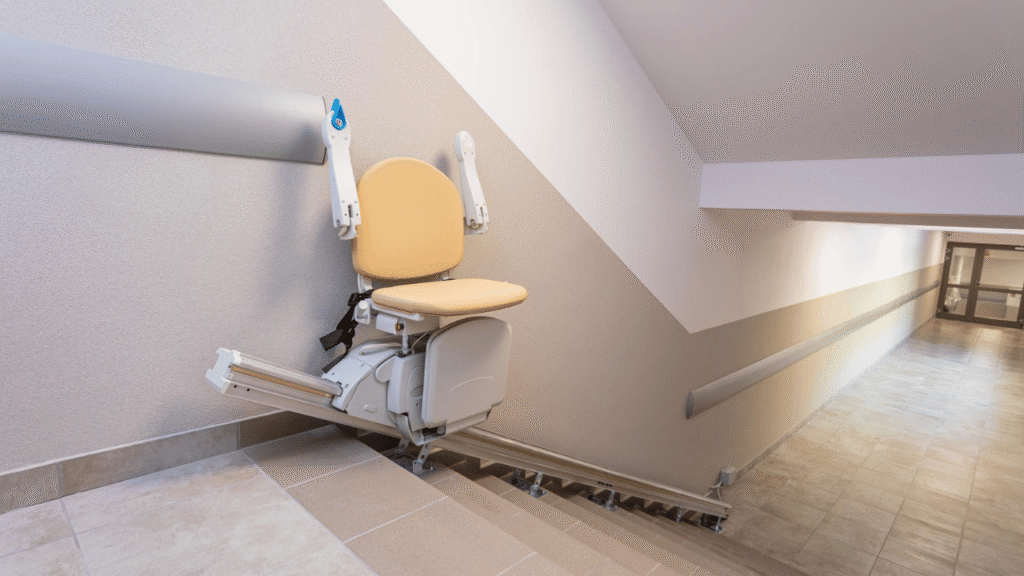
Standing Stair Lifts vs. Standard Straight Stair Lifts: Key Differences
To clearly understand the differences between these two designs, it helps to compare how they perform in real home situations. Both options support safe stair mobility, but they suit different physical needs and staircase layouts.
| Feature | Standing Stair Lift | Standard Straight Stair Lift |
|---|---|---|
| Position | Perching / semi-standing | Fully seated chair |
| Space | Very compact; ideal for narrow stairs | Requires more clearance |
| Balance Need | Needs moderate stability | Suitable for low balance users |
| Comfort | Minimal seating, upright support | Full chair with backrest & armrests |
| Best For | Knee or hip stiffness | Fatigue or weak balance |
Both straight stair lifts for seniors and standing models improve home accessibility, but the right choice depends on physical ability and staircase space.
Safety Features to Look for in a Standing Stair Lift
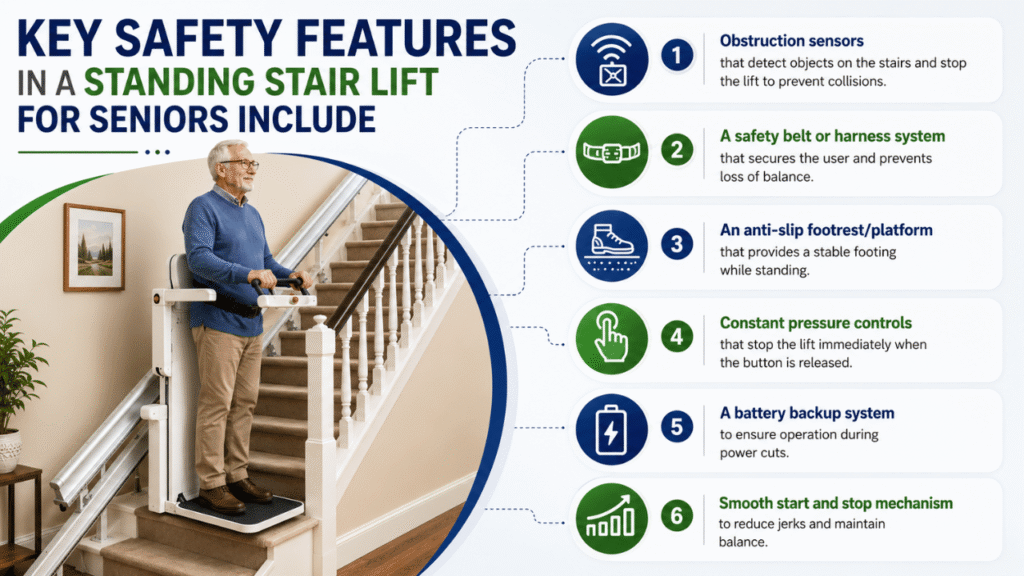
A standing stair lift is designed for users who travel in an upright or semi-standing position, so safety systems must focus on stability and balance control. A reliable standing stair lift for seniors should include essential protections that ensure safe movement throughout the staircase.
Key Safety Features in a Standing Stair Lift for Seniors Include:
- Obstruction sensors that detect objects on the stairs and stop the lift to prevent collisions.
- A safety belt or harness system that secures the user and prevents loss of balance.
- An anti-slip footrest/platform that provides a stable footing while standing.
- Constant pressure controls that stop the lift immediately when the button is released.
- A battery backup system to ensure operation during power cuts.
- Smooth start and stop mechanism to reduce jerks and maintain balance.
Standing Stair Lift Costs and Installation Requirements
When planning for home accessibility, it’s important to consider both equipment cost and installation needs. The standing stair lift cost for straight models is generally similar to seated options, with pricing varying based on features, weight capacity, and staircase design.
Installation Requirements
- Secure rail mounting: The lift is fixed to the stair treads (not the wall) to ensure strong stability
- Power supply: A nearby standard electrical outlet is required to keep the system charged
- Clearance space: Adequate headroom is needed since the user travels in an upright position
- Professional installation: Ensures correct alignment, safety, and smooth operation
Whether choosing a standing stair lift for seniors or comparing different straight stair lifts for the elderly, proper installation is essential for safe use. It also ensures comfortable positioning throughout the staircase.
How to Choose the Right Standing Stair Lift for Your Home
Choosing the right standing stair lift depends on your staircase layout and daily mobility needs. Start by checking the width and shape of your stairs, as tighter spaces often suit compact perch-style designs. Balance is also important, since upright lifts need more stability than seated options. If standing for long feels uncomfortable, comparing it with a straight stair lift for the elderly can help you decide which position feels more secure.
Next, look at how often it will be used and what comfort level you need, such as foot support, simple controls, and suitable weight capacity. Finally, think about long-term use. When considering the straight stair lift cost, include maintenance, warranty, and service support, as these affect overall reliability. Whether you choose a standing stair lift for seniors or a seated model, the right lift should feel safe, easy, and comfortable for daily use.
Conclusion: Are Standing Stair Lifts Worth It for Home Mobility?
Standing stair lifts are a practical option for homes with narrow staircases or users who need upright support while moving between floors. They combine a compact design with essential safety features, making daily movement easier without major home changes. Best suited for users who can maintain basic balance, they offer a reliable mobility solution when matched to the right needs and home layout.
Need a safer way to move between floors? HomePRO Mobility offers trusted stairlifts for the home, ramps, and expert installation based on your needs. We focus on comfort, safety, and independence, helping you choose the right mobility solution for your home.
Frequently Asked Questions
Can a Standing Stair Lift Be Installed on Any Staircase?
No. Most standing stair lifts are designed for straight staircases. Curved or multi-landing stairs usually require a custom rail system, which affects both cost and installation time.
How Much Space Does a Standing Stair Lift Take Up?
Standing stair lifts are much more compact than seated models. Their slim “perch” design makes them suitable for narrow staircases, often fitting where space is too limited for a full chair-style lift.
What Is the Weight Capacity for a Standing Model?
Most standing stair lifts support around 250-300 lbs (115-135 kg). Higher-capacity models are available, but they may require additional space and specific staircase compatibility.
