
A stair lift should feel safe and stable every time you use it. Every motorized chair is built to support a specific range to ensure ride stability and long-term reliability. While standard models work well for many households, some users require a heavy-duty stairlift for extra support. Knowing how weight limits work can help you choose a stair lift that fits both your mobility needs and your staircase layout.
What Is the Average Stair Lift Weight Limit?
Most standard stair lifts support between 300 and 350 pounds. Some heavy-duty stairlift models can safely accommodate up to 600 pounds, depending on the motor strength, rail system, and seat design. The exact stair lift weight capacity varies by manufacturer and staircase type.
Straight stair lifts often support more weight because the rail system is simpler and more stable. Curved models may have a different limit due to custom turns and track configurations.
| Stair Lift Type | Average Weight Capacity | Best For |
| Standard Stair Lift | 300 to 350 lbs | Everyday residential use |
| Heavy-Duty Stairlift | 400 to 600 lbs | Higher weight support |
| Curved Stair Lift | 250 to 350 lbs | Staircases with turns |
| Outdoor Stair Lift | Around 300 lbs | Exterior stairways |
A stair chair lift’s maximum weight includes both the user and any carried items. If you regularly carry oxygen equipment, bags, or mobility aids, that added weight should also be considered when selecting a stair lift.
When Is a Heavy-Duty Stairlift Necessary?
A heavy-duty stairlift is necessary when the total weight of the user and any carried items exceeds the capacity of standard models, which is typically around 300 pounds. You should consider a bariatric stair lift if:
- The user weighs more than the standard 300 to 350-pound limit
- A wider seat is required for daily comfort and proper support
- Heavy medical equipment adds to the total operating load
These models use reinforced tracks, stronger motors, and wider seating for added support. Leading brands even offer a highly reliable 500 lb capacity stair lift, so you never have to sacrifice a smooth and secure ride.
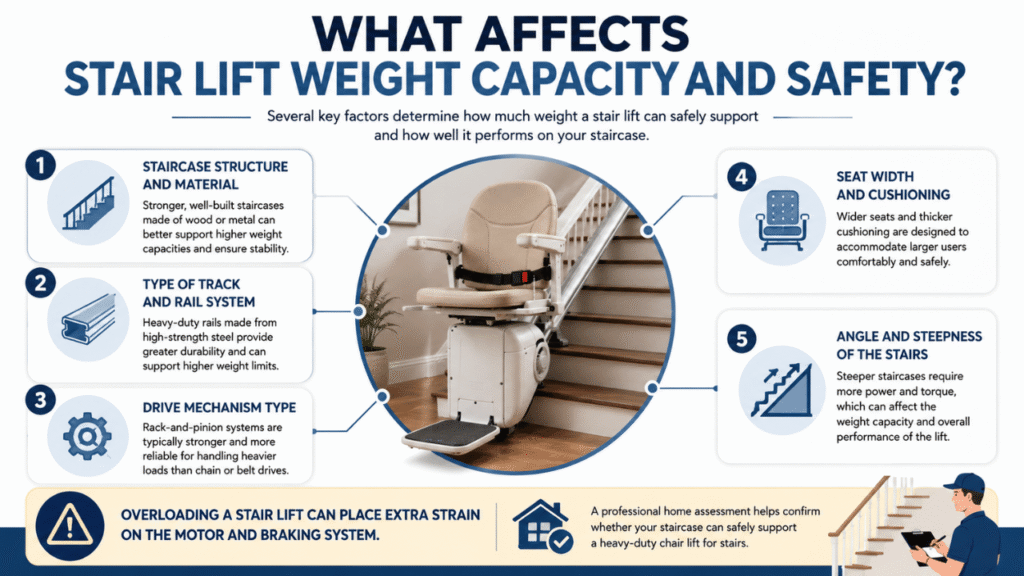
What Affects Stair Lift Weight Capacity and Safety?
A stair lift’s weight capacity is determined by a combination of the chair design, motor power, and the physical structure of your staircase. Exceeding these limits can cause severe motor strain, sudden stops, or mechanical failure. Important factors that affect capacity and safety include:
- Staircase structure and material
- Type of track and rail system
- Drive mechanism type
- Seat width and cushioning
- Angle and steepness of the stairs
Overloading a stair lift can place extra strain on the motor and braking system. A professional home assessment helps confirm whether your staircase can safely support a heavy-duty chair lift for stairs.
Stair Lift Safety Features That Matter Most for Weight Limit
A high weight capacity alone does not guarantee a safe ride. The right stair lift safety features help improve stability, reduce accidents, and support smoother operation during daily use. Important safety features to look for include:
- Stair lift obstruction sensors that stop the unit if something blocks the track
- Swivel seat stair lift designs for safer entry and exit at the landing
- Adjustable seat belts for added rider security
- Foldable footrests to reduce tripping hazards
- Backup battery systems during power outages
- Smooth start and stop controls for steadier movement
Standard vs. Heavy-Duty Stair Lift Options
Choosing between a standard and heavy-duty model depends on weight requirements, seat comfort, and staircase space. This comparison highlights the main differences between the two options.
| Feature | Standard Stair Lift | Heavy-Duty Stairlift |
| Average Capacity | 300 to 350 lbs | 400 to 600 lbs |
| Seat Design | Compact seating | Wider seating surfaces |
| Rail System | Standard track | Reinforced Stair Lift Track |
| Best For | Everyday residential use | Bariatric Mobility Equipment needs |
| Ride Feel | Basic support | More stable and spacious |
Some users prefer a heavy-duty lift chair for stairs, even if they fall within the standard weight range. Certain models with higher Bruno stair lift weight capacity options are also designed to provide additional support without requiring commercial accessibility equipment.
Can Curved Stair Lifts Handle Higher Weight Limits?
Yes, many curved stair lifts can support higher capacities, though the exact limit depends on the staircase layout and rail design. Most standard curved models support around 300 pounds, while some heavy-duty options can safely accommodate higher capacities.
Because curved systems use custom tracks around turns and landings, the curved stair lift weight limit may differ from that of a straight model. Professional installers assess the rail structure, staircase width, and mounting points to ensure the lift can safely support the required weight capacity.
The Bottom Line: How to Choose the Right Stair Lift Weight Capacity
Stair lift weight limits help you choose a model that supports both safety and daily comfort. From standard units to heavy-duty options, the right capacity depends on the user’s weight, staircase layout, and overall mobility needs. Features such as reinforced tracks, wider seating, and built-in safety systems also play an important role in long-term performance and ride stability.
At HomePRO Mobility, we provide stair lift solutions designed for straight, curved, and higher-capacity staircase setups. Our team focuses on helping homeowners find reliable mobility equipment that fits their space, support requirements, and accessibility goals.
Frequently Asked Questions
What Is the Weight Limit for a Stair Lift?
Most standard stair lifts support between 300 and 350 pounds. Some heavy-duty stairlift models can safely support up to 600 pounds, depending on the rail system and seat design.
Does a Stair Lift Weight Capacity Include Carried Items?
Yes, the total stair lift weight capacity includes both the user and any carried items such as oxygen equipment, bags, or mobility aids.
Are Bariatric Stair Lift Models Different from Standard Stair Lifts?
Yes, a bariatric stair lift is built with reinforced components, wider seating, and stronger motors to safely support higher weight capacities and improve ride stability.
Can a Curved Stair Lift Handle a Higher Weight Capacity?
Some curved stair lift models support higher capacities, but the final limit depends on the staircase layout, rail structure, and overall installation design.
What Safety Features Are Important in a Heavy-Duty Chair Lift for Stairs?
Important stair lift safety features include stair lift obstruction sensors, seat belts, backup battery systems, and swivel seat stair lift designs for safer entry and exit.
Are Bruno Stair Lift Weight Capacity Options Suitable for Higher Support Needs?
Certain Bruno stair lift weight capacity models are designed for users who need additional support, with some options supporting up to 400 pounds, depending on the stair lift configuration.
